
Dark store kitchen
iOS/Android
B2B
2024


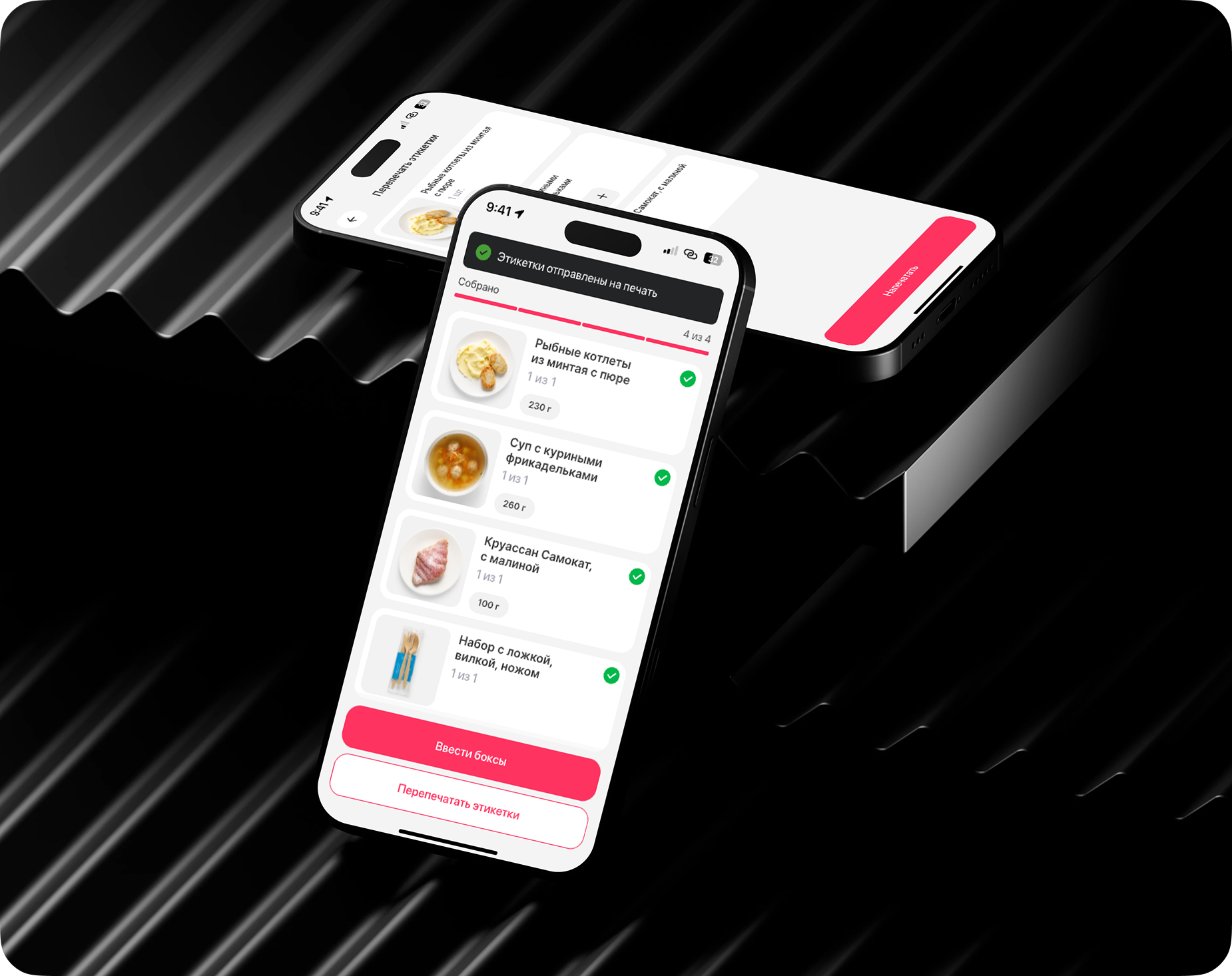
The kitchen is one of Samokat's new projects and is responsible for fast delivery of hot meals to clients
The business prioritizes fast order assembly and quick handoff to delivery.
Metrics
• Time to Task
• Speed of taking a task into work
• Product quality
• Speed of taking a task into work
• Product quality
DAU
400 operators
Dark Stores
240
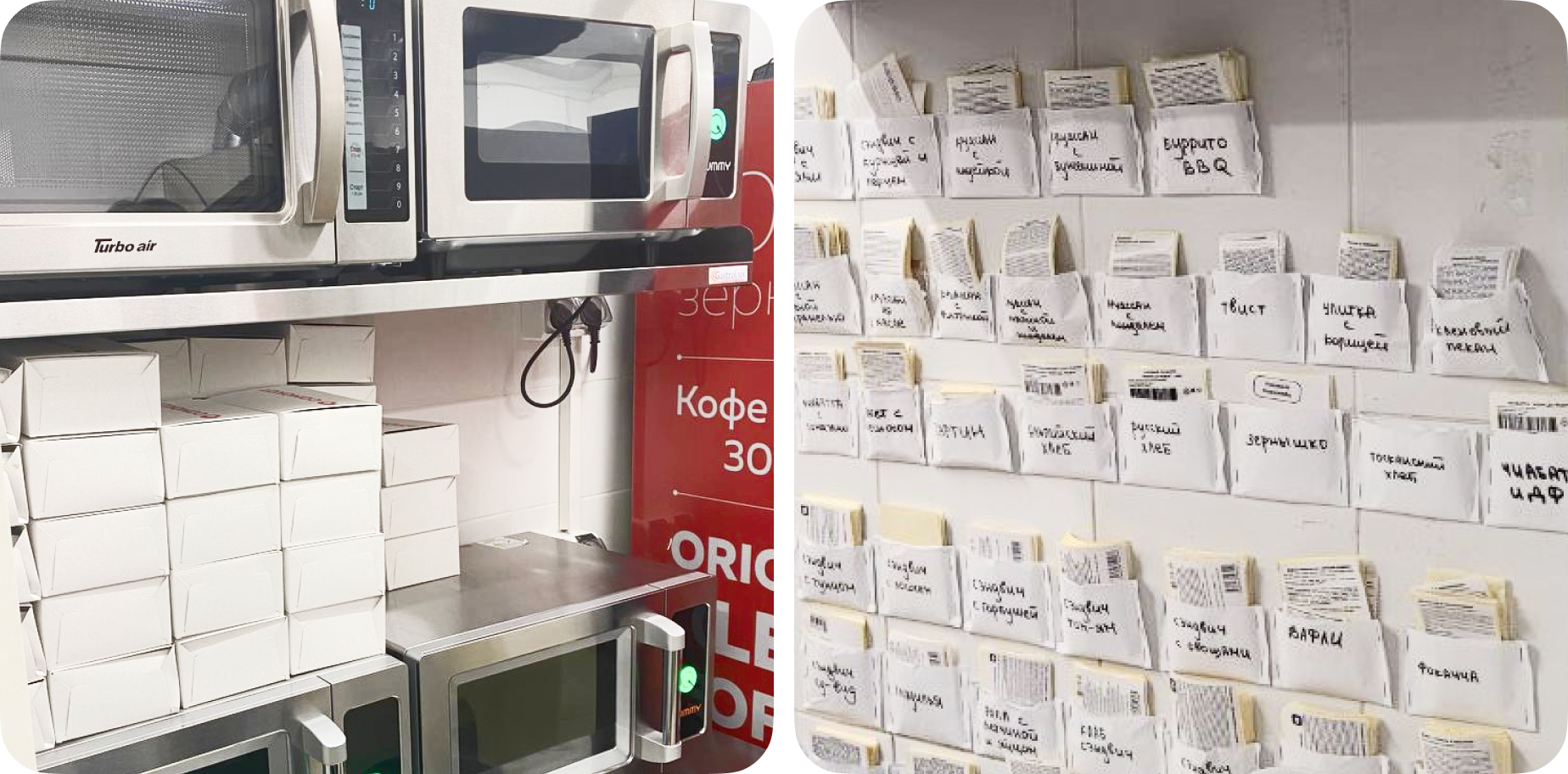
In the physical workflow, the operator finds the items from the order and puts them on heating. After that, they need to prepare labels with ingredients and production dates for the meals. Without a label, the meal cannot be handed over for delivery.
Problem
We identified a significant number of food order cancellations from kitchens
Labels are printed and distributed by a supervisor to dark stores with kitchens. Operators use pre-printed labels to hand meals over for delivery. If the recipe changes or a label is missing, the meal cannot be delivered to the client.
My role
Worked end-to-end on the project: from discovery and problem definition through design to final release
• Joined at the stage of active kitchen rollout.
• Conducted field research in 2 dark stores.
• Identified key issues affecting Time to Task, errors, and item removal from orders.
• Together with the product manager, we pitched the idea of label printing to the business (at that time, labels were printed and distributed by a supervisor).
• Conducted 10 UX tests
• Together with the product manager, ran a technical launch in 10 dark stores.
• Released the updates to 240 dark stores
Busines pain points
Labels are expensive; if the recipe changes, the entire batch is written off
An item is removed from the order if labels run out or expire
Labels are printed in advance and distributed across warehouses
Many people are involved in distributing labels across warehouses
Kitchen operators' pain points
Forced to search for the correct label
Labels run out or become outdated
If there is no label, the item is written off
There is a need to spend less time
The main insight
The app should help operators have only order-relevant, up-to-date labels at hand
Hypotheses
Printing labels during order assembly will reduce the supervisor's workload
Involvement of additional staff
Label printing will increase product availability on the storefront
Availability, profit
Label printing will speed up assembly and reduce cancellations
Time to Task
Label printing will eliminate the need for pre-printing resources
Additional resources
Label printing will eliminate the issue of disposing unused label batches
Additional resources
Label printing will eliminate the problem of removing items from orders
Write-offs, customer experience
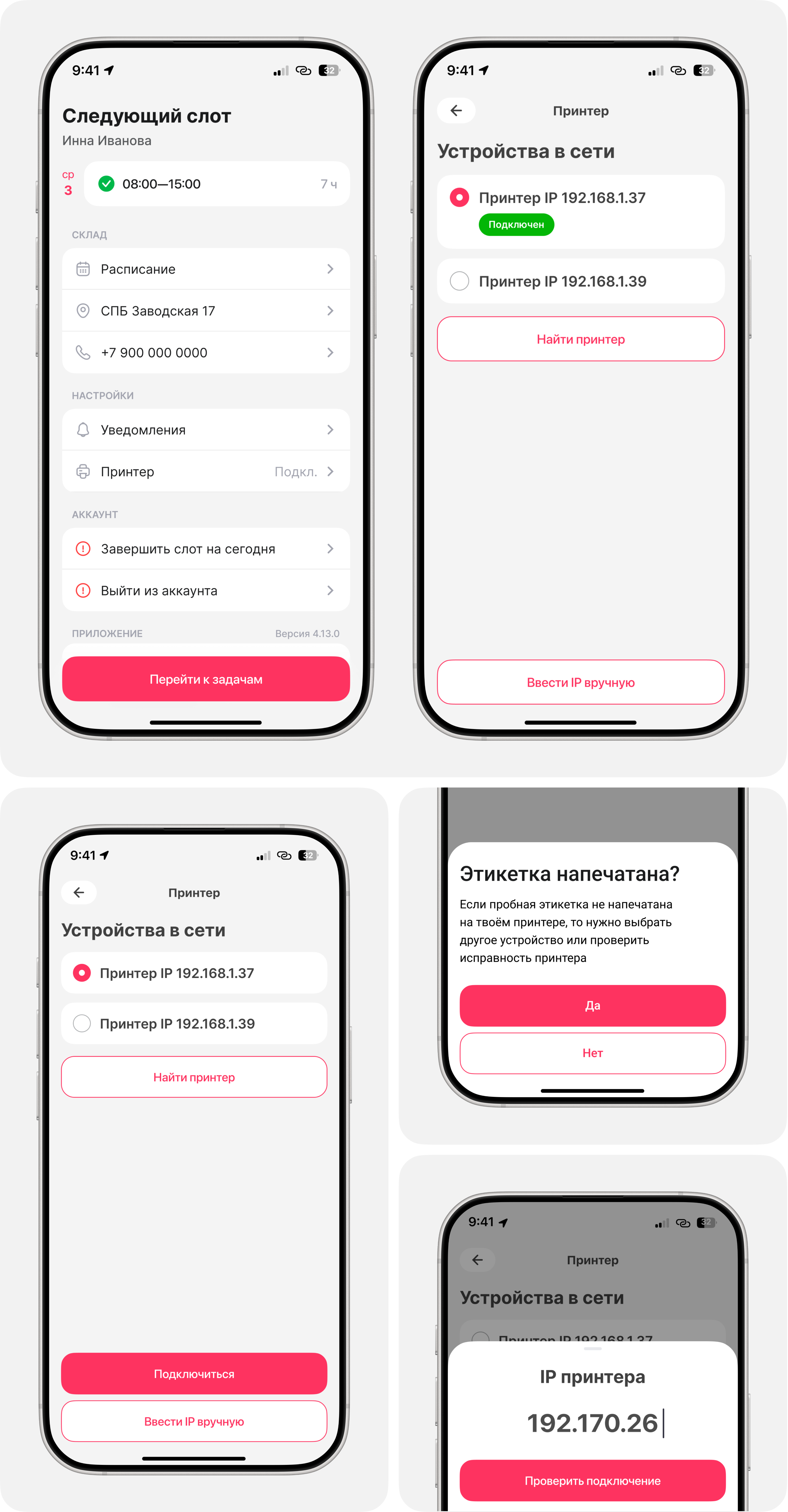
Printer integration
Start of assembly
Kitchen operators mark the goods as collected, reheat them, and proceed to print labels
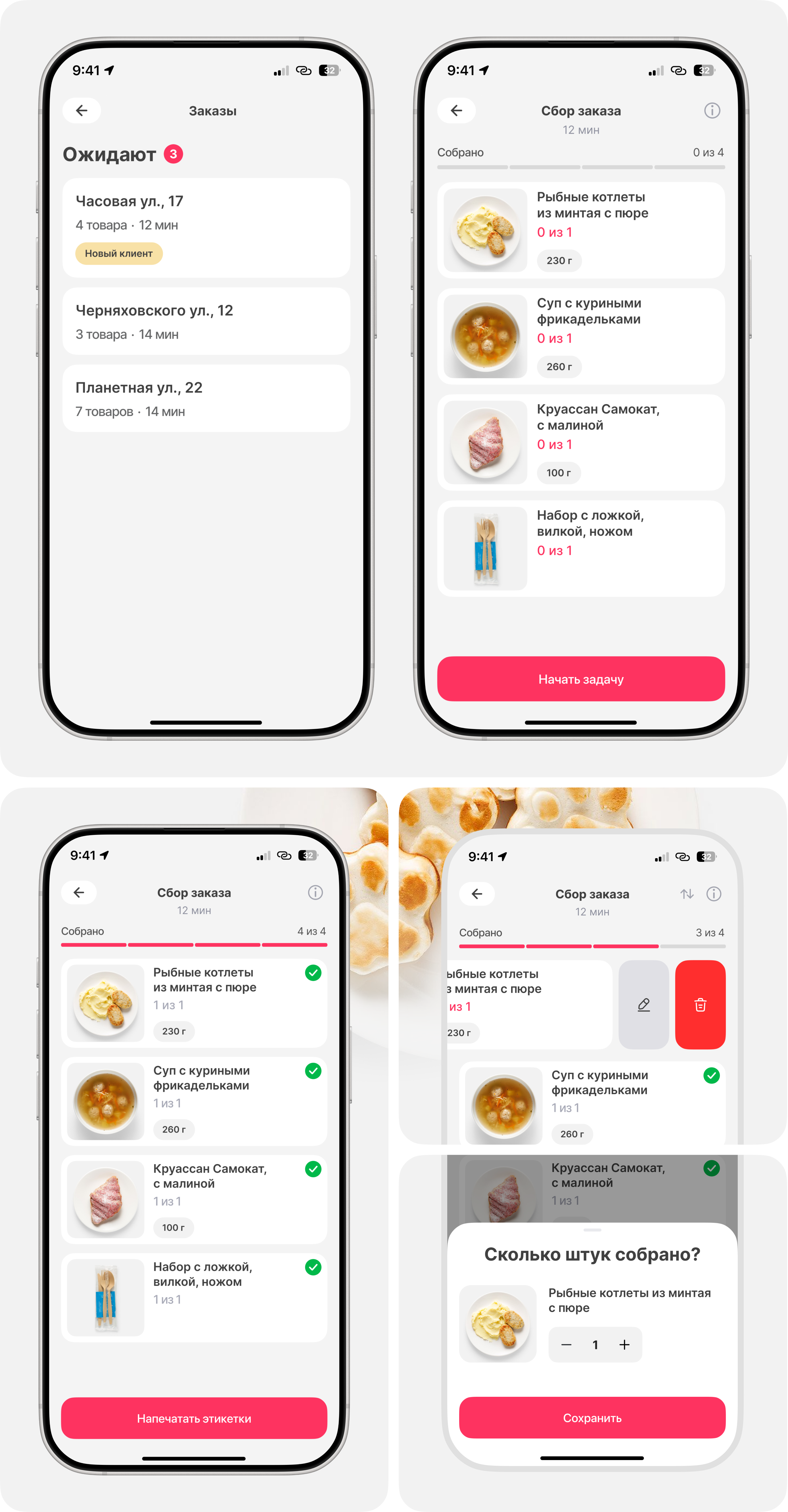
Label printing
If the label has not been printed or has been damaged, it can be reprinted
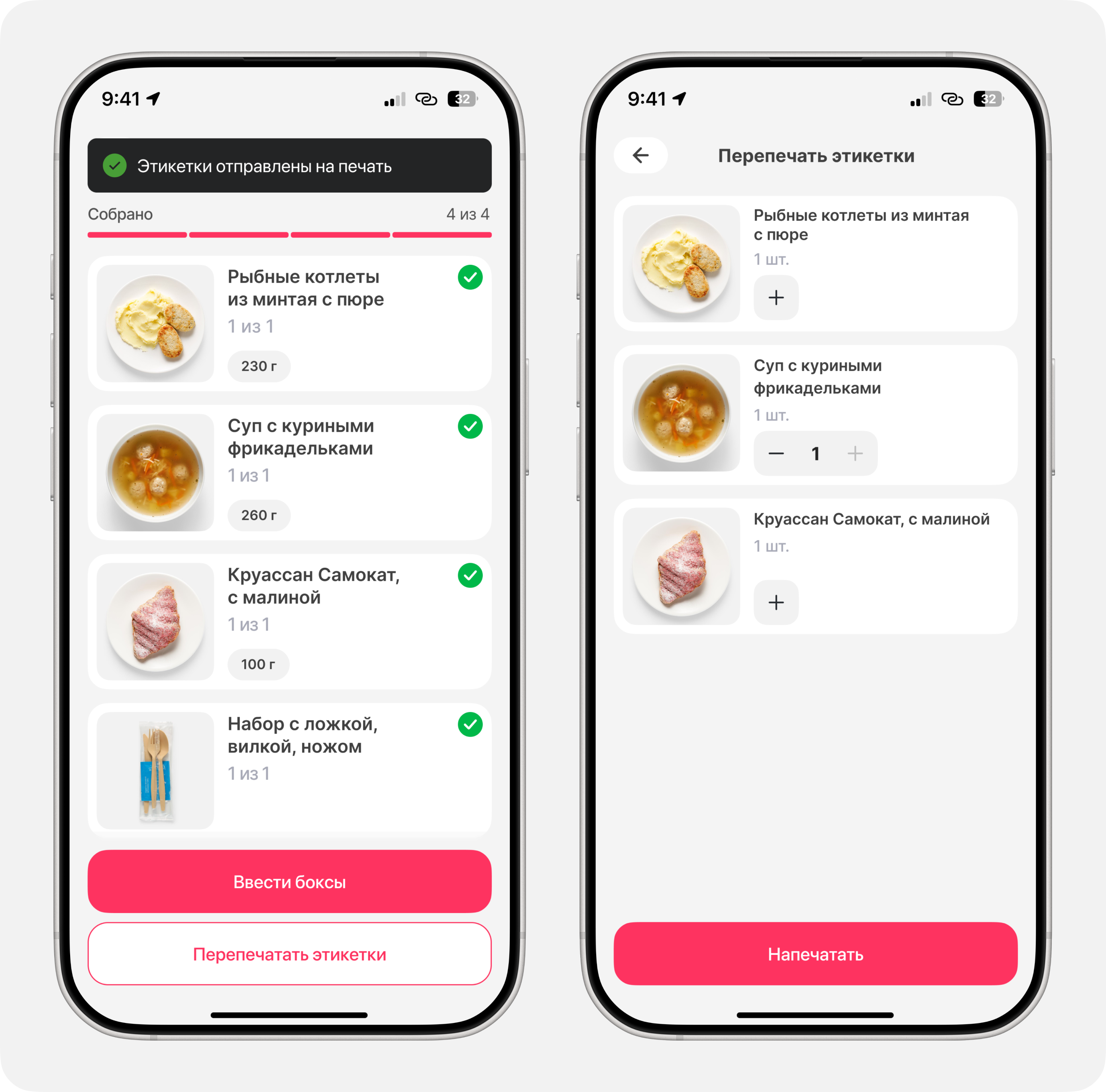
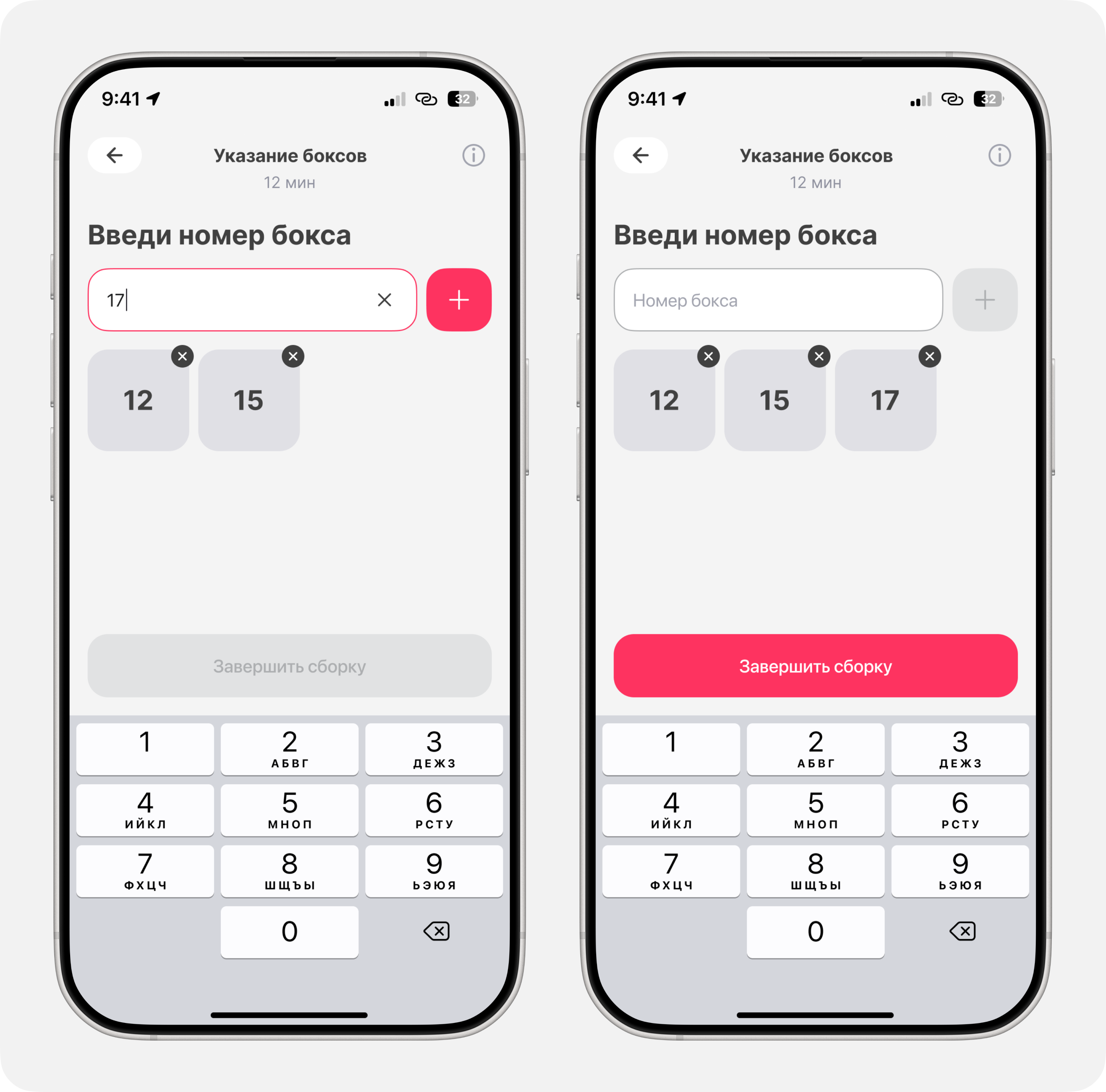
Entering box numbers and completion
To complete the task, you must enter the box numbers to transfer the order for delivery
Result
Together with the product manager, ran a technical launch in 10 dark stores.
Released the updates to 240 dark stores.
-12M RUB
Savings from label printing and canceled orders per year
-10%
Supervisor workload
-5%
Canceled orders
Label printing allowed kitchen operators to spend less time searching and hand off orders faster